A soldier’s tale
CHF

About The Programme
An old violin, a magic book that promises great riches, and the devil. These are the three main ingredients of «The Soldier’s Tale». This folktale tells of a soldier heading home who enters into a fateful deal with Beelzebub. The soldier teaches the devil how to play the violin within three days, then gives him his violin; in return, the soldier is given a book whose secret contents make him wealthy. But the deal has its price: the soldier reaches home not three days later, but after three years, and neither his mother nor his fiancée recognises him. Although the magic book has brought him wealth, our deserter now wanders the world a lonely man. In order to escape his isolation, he makes it his mission to heal a princess whom the devil has cursed. Through trickery at cards and with the help of a lot of alcohol, the soldier manages to steal back his old violin from Beelzebub. When the soldier plays the violin, the princess is healed and begins to dance – and the devil collapses, exhausted. But the forces of evil aren’t conquered yet: When our fairy-tale hero decides to go back home once more, the devil is again lying in wait for him …
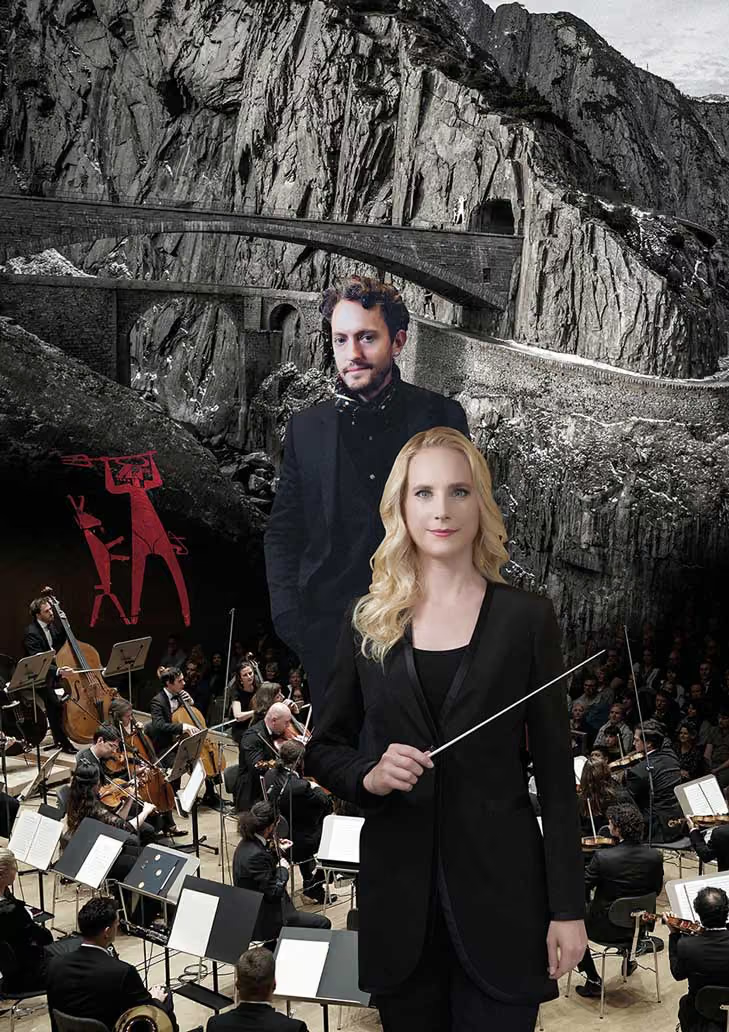
«Between Chur and Wal(l)enstadt, a soldier makes his way homewards» – thus begins Igor Stravinsky’s music-theatre work «L’Histoire du soldat», unceremoniously transferring this old Russian fairy tale to Switzerland. How did this come about? Stravinsky was based near Lausanne from 1915 to 1920. The First World War made it so difficult for him to get commissions and performances at major theatres that he had to adapt. Together with the important Vaudois poet Charles Ferdinand Ramuz, he conceived a play based on a Russian tale for a small instrumental ensemble, a narrator and dancers – something that could also be performed by a travelling theatre company. Stravinsky’s musical style, however, remained cosmopolitan. We hear echoes of klezmer, a paso doble and a Lutheran chorale, and the princess dances to the strains of a tango, a waltz and ragtime.
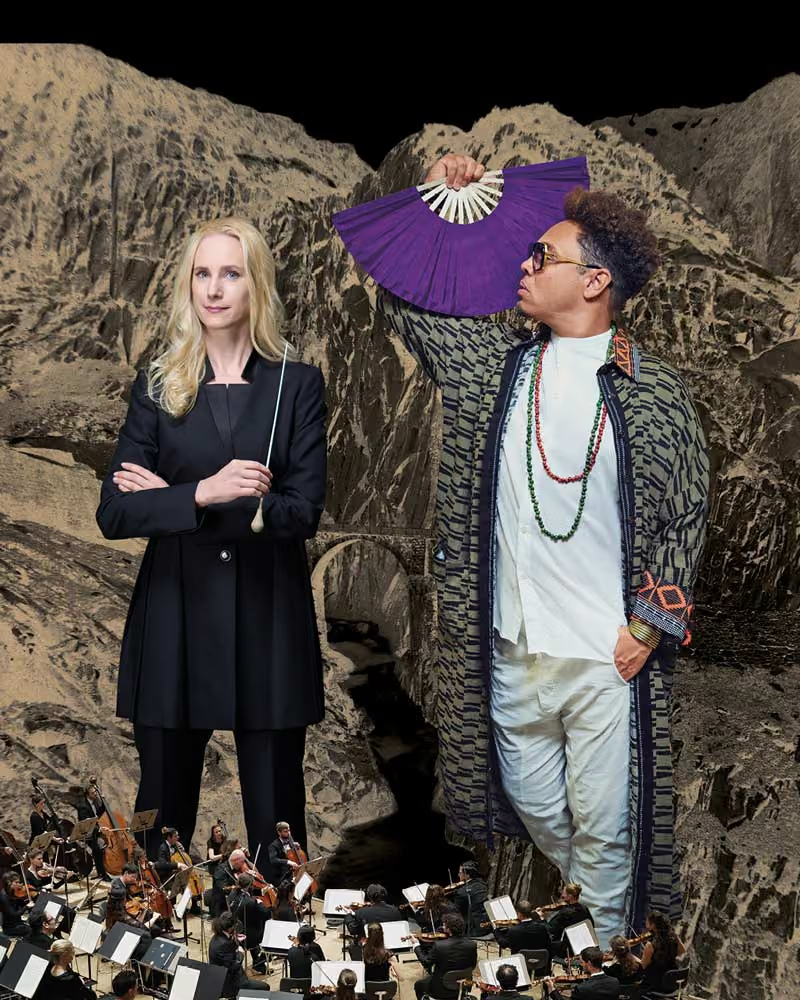
The story will be narrated by the actor Andri Schenardi from Altdorf, and soloists from the Swiss Orchestra will perform under the baton of Lena-Lisa Wüstendörfer.
Lineup
SOLOISTS OF THE SWISS ORCHESTRA
LENA-LISA WÜSTENDÖRFER, conductor
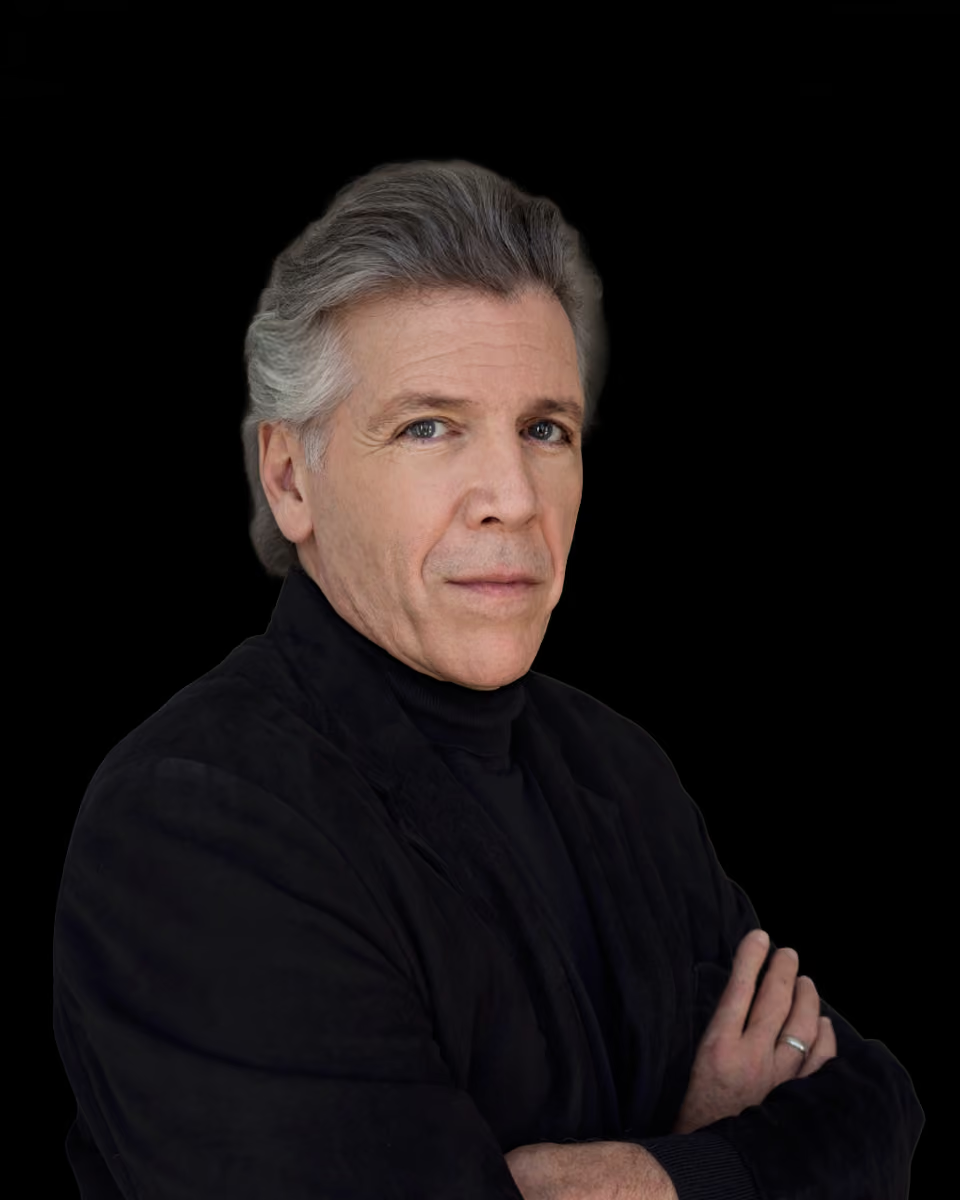
ANDRI SCHENARDI, actor
programme
IGOR STRAWINSKY (1892–1971)
The Soldier’s Tale
concert hall
Andermatt

How to get there
Details on how to get there can be found on the ANDERMATT MUSIC website.
barrier-free access
The Andermatt concert hall is barrier-free. Wheelchair tickets are available via email at info@andermattmusic.ch or at Andermatt Alpine Apartments at +41 41 888 78 00.
Seating on the balcony is recommended for people with reduced mobility. Chamber music concerts and New Folk Music concerts usually do not have grandstand seating: Here, all seats are accessible without steps.
The Andermatt concert hall has an inductive listening system.
Garderobe
evening ticket office
The box office opens 1 hour before the start of the concert.
Doors open / late entry
Admission to the concert hall is 30 minutes before the start of the concert. Late admission is only possible during applause between plays and on the guidance of the hall staff.
Discount
Discounts are available for children, students and members of the Gotthard MemberClub. Details about the benefits can be found here.
Andri Schenardi was born in 1980 in Altdorf in Canton Uri. He studied drama at the Zurich University of the Arts, and his first engagement was in 2007 at Konzert Theater Bern, working with directors such as Erich Sidler, Matthias Kaschig, Markus Bothe, Jan-Christoph Gockel and Claudia Bauer.
Schenardi has played various leading roles in classical and modern theatre including Hamlet, Pinocchio, Volpone, Cyrano de Bergerac, Jay Gatsby and even the female head of the mental asylum in Dürrenmatt’s “The Physicists”, Mathilde von Zahnd. As a freelance actor, Schenardi is active in theatre and in film, and has also recorded radio plays. His main role before the camera up to now was as the narrator Franky Loving in Dani Levy’s one-take episode of the series «Tatort», namely «Die Musik stirbt zuletzt».
Andri Schenardi has been a freelance actor since 2014 and is regularly engaged by the Grazer Schauspielhaus and elsewhere.
For everyone who wants to hear Swiss symphonic music, and to live it too
Enjoy exclusivebenefits, get a glimpse behind the scenes, and do a good thing